All images courtesy of the artist.
Documentary photographer Akasha rabut reflects on the rebirth of New orleans & its community in her photo book ‘death magick abundance’
words Shaelyn Stout
Akasha Rabut is a New Orleans-based photographer and educator whose work explores the multiplicity of subcultures and traditions rooted in the American South. Her most recent project is a photobook entitled Death Magick Abundance, which documents and celebrates 10 years of post-Hurricane Katrina culture in New Orleans, Louisiana. In our conversation, Rabut discussed the inspiration behind her photobook and the value of community in redefining one’s reality following natural disasters and related systemic oppression.
Shaelyn: Your photography centres people, from New Orleans natives to empowering women and politicians of colour such as Alexandria Ocasio-Cortez and Stacey Abrams. What drives you to people as opposed to landscapes, still-life and/or other photographic genres?
Akasha: It really comes from my love of people, friendships and relationships. I think we have a lot to learn from each other. It’s really helpful to talk to other people while I work because I often struggle with my own depression and in my own head. Being around people is medicinal for me. There’s something about photographing, speaking to and celebrating life with others that makes my work and my experience feel truly collaborative. I don’t think of people I photograph as my subjects; they are people I’ve made friends with along the way. Death Magick Abundance is not my book in that respect, it’s very much a book for and by New Orleans.
Considering the range of people in which you speak to and photograph, have you found any overarching themes that may bring these groups together? Are there ways to bridge gaps between the realities of let’s say, a politician and an urban horseback rider?
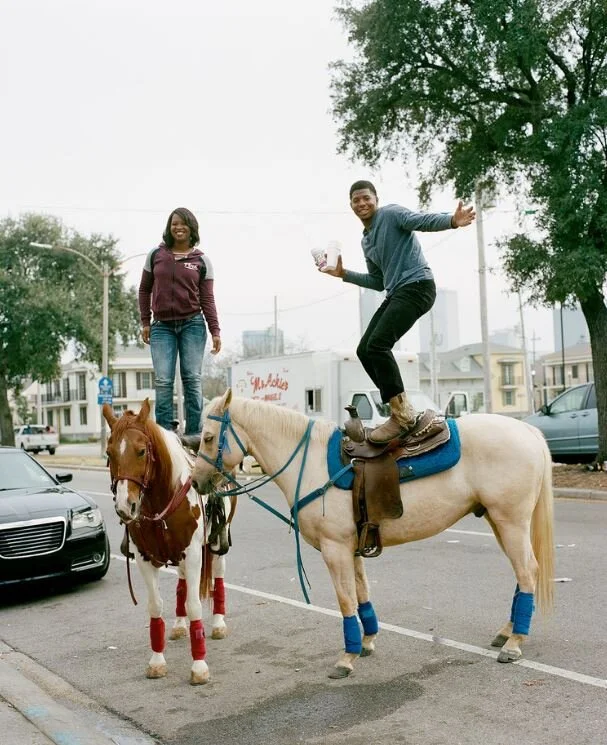
I think it’s really about all of these people having a positive influence on the world and using their voices to make change. The Southern Riderz and the Caramel Curves both do a lot of community work to help out local non-profits; they stand as role models for younger generations in New Orleans. So if there was one thing I’d say connected these groups or bridged any gaps between them, it would definitely be their dedication to the communities they serve and and still live in.
“There’s something about photographing, speaking to and celebrating life with others that makes my work and my experience feel truly collaborative.”
Can you give a brief introduction to your photobook Death Magick Abundance? What inspired you to capture the spirit of New Orleans on camera?
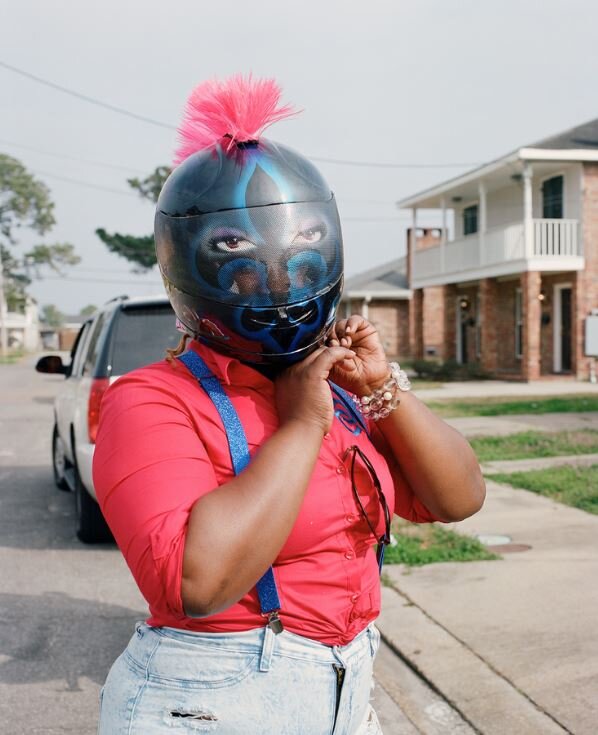
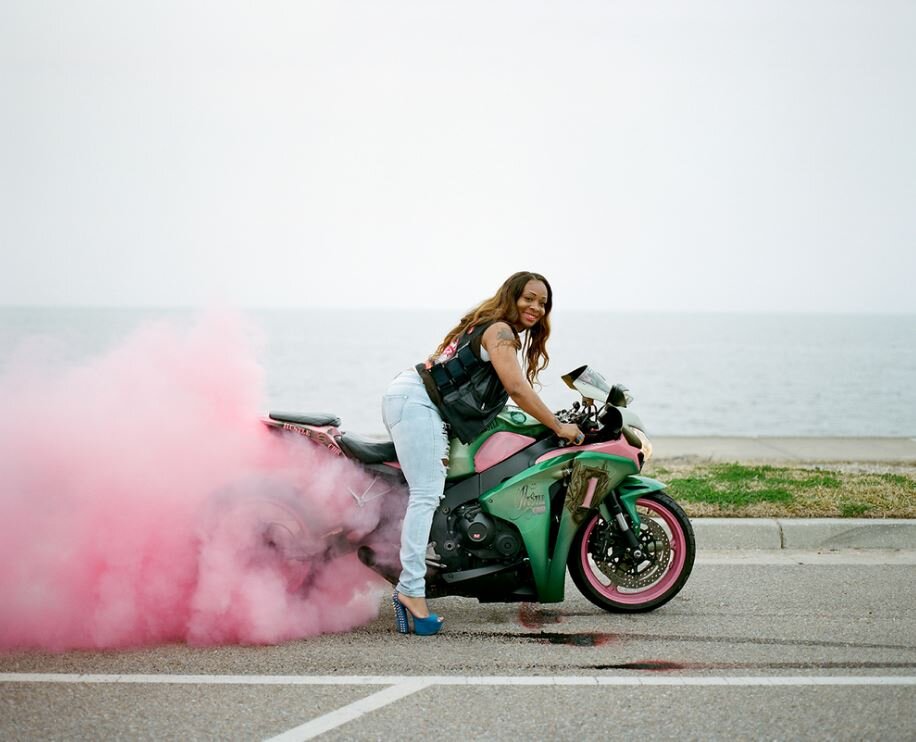
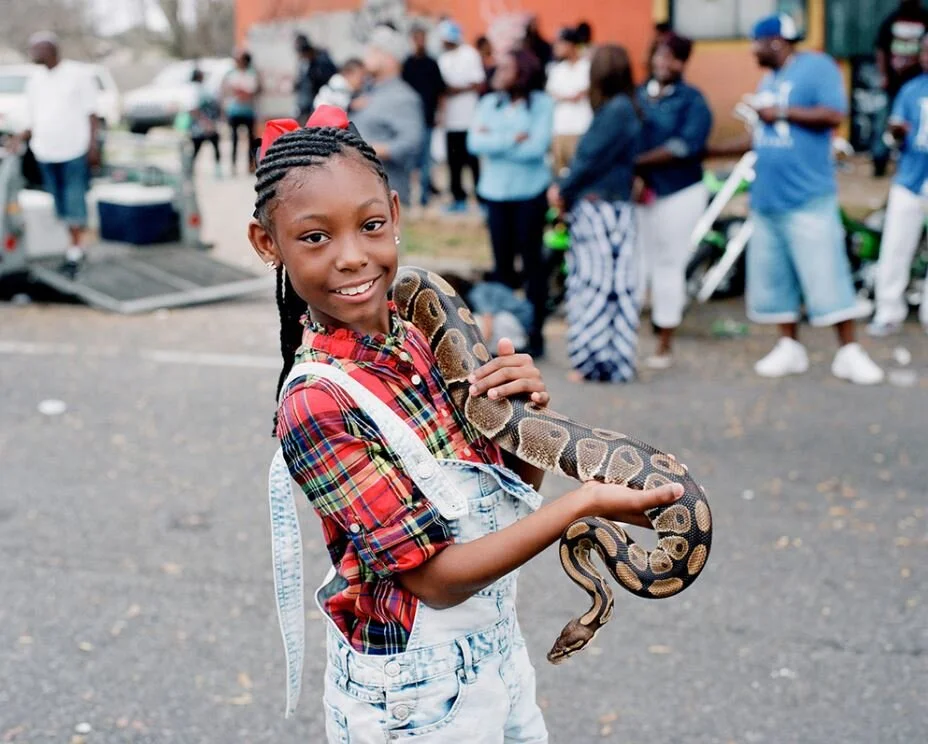
Death Magick Abundance chronicles 10 years of post-Hurricane Katrina culture. I spent five years photographing the Southern Riderz and another five documenting the Caramel Curves, who are the first all female African American motorcycle club. The book is split into those two parts and then we also included oral histories with some of the people I spent time with. Finally, these sections are sandwiched with more general images of New Orleans to give context about what the city is like and who the people are that truly make New Orleans the community it is.
Why the title Death Magick Abundance?
It’s funny because the title actually came from some Tarot cards I drew pretty early on in the project, so from the start “Death, Magick, Abundance” was like my own personal mantra. As I continued the work, I had a really hard time coming up with a title and nothing seemed to be fitting. Looking back to my mantra however, I realised that those words “Death, Magick, Abundance” encapsulated New Orleans perfectly. You know, it’s this place where death exists metaphorically. The city is sinking, we’re constantly hit by hurricanes, but at the same time through that destruction is this sense of rebirth. The book is about post-Katrina culture, and through this work I’ve realised that New Orleans didn’t bounce back from that metaphorical death because they received help from the government. It was the people, the community that, against all odds, rebuilt the city. I felt like this story was truly a phoenix rising from the ashes, which perfectly represented the magic and abundance aspects of my mantra.
“The book is about post-Katrina culture, and through this work I’ve realised that New Orleans didn’t bounce back from that metaphorical death because they received help from the government. It was the people, the community that, against all odds, rebuilt the city.”
The book explores New Orleans’ subculture through photographs of the Caramel Curves and the Southern Riderz. Can you tell me more about what they do? How did you meet these groups and what was it like working with them?
I didn’t have a car at the time so I was actually just on my bike and approached them asking, “Can I take some photos of you?”. I don’t think either of us knew what that meant at the time. When you go into these kinds of projects you have to be open to learning and changing your perspective throughout. Flash forward to five years later and the Caramel Curves are famous. They treated me like family, you know, I was invited to their houses and get-togethers, even to hang out with them at the nail salon.
Do you think there was an inherent connection between you, as a woman of colour photographing the Caramel Curves and the Southern Riders, and the primarily POC members of these groups? Do you think that is an important aspect of your work?
Something I think about quite often is that I am a woman of colour but I’m not Black and I’m not from New Orleans, so that’s always something I want to have open and honest conversations about. Death Magick Abundance could have easily been this sort of white-gaze-y commodified book, but I am happy to say that the groups I photographed (the Caramel Curves and the Southern Riderz) have welcomed myself and my work into their community. We’ve become friends throughout this process. I will say being a woman was really what helped forge the connection between myself and these groups. It’s often white men who get this kind of work published and out into the world, but what sets my photography apart is its intimacy and tenderness. And I think because of my openness and curiosity as a photographer and woman of colour, I often attract this sense of comfort in my subjects. I’ll ask someone off the street if I can take their photo and the next thing I know I’m being introduced to their family or walking through their home.
Thinking particularly about audiences who are not from New Orleans or who may not have a connection to the city, what do you hope readers will take away from Death Magick Abundance?
I want this book to be about fighting racism and misogyny. I hope audiences see the importance of community and the benefits of combating systemic oppression. There’s a lot of love in this book, and I hope it becomes a visual learner for creating justice and breaking away from racist and misogynistic attitudes.
*This interview has been edited and condensed for clarity.
Purchase Death Magick Abundance here.
Visit Akasha’s website to learn more about her work.
Check out the Caramel Curves on Instagram.