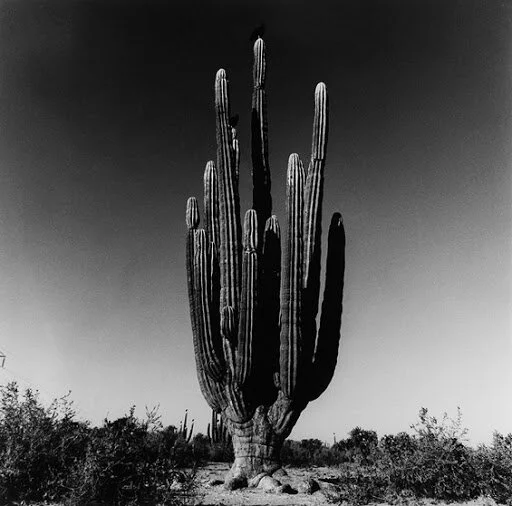
Image: Graciela Iturbide
mexican-born, london-based writer Natalia albin reflects on her decision to leave home & the guilt that came with it
words Natalia Albin
Trigger warning: Sexual assault & rape
My UK student visa briefing was a strange night. The room was made to feel inviting. Faded lights and a bar that only served one kind of beer signaled the failure of that attempt—which was appreciated nonetheless. The man at the front of the room cited a statistic. I knew it shouldn’t surprise me, but it did: “Only 2% of people manage to leave Mexico to study abroad. Make the most of it!” Make the most of it. His presentation was followed by a series of UK graduates who had come back to Mexico to “make our country better with ideas from Europe.” The message was clear: get your diploma and come back home—Mexico needs you. Noting the obvious colonial undertone of the message, it stung.
Make the most of it and come back home.
Some people say our choices are made from small, seemingly insignificant moments—and most of them are. However, the moments that resulted in my decision to leave Mexico never felt small or insignificant. They were like bombs consistently forcing me to question my identity, where I was born and all those around me.

Image: Natalia as a toddler.
My decision to leave developed when, at twelve, I knew to expect the sight of people hanging from bridges in Mexico City “It’s all bad people, darling, you don’t have to worry. It’s people in the drug trade,” I remember being told. As if that is something I could understand, as if people who fell into the drug trade did by choice and not necessity.
It continued when, at thirteen, I heard that a girl just three years older than me, Rubí Marisol, was murdered by her partner and he was acquitted in court. And again when that case slipped my mind because to this date, approximately eleven women are killed by men each day in Mexico.
When, at sixteen, a man followed me in his car and I felt grateful that all he did was grope me instead of kidnap or kill me.
When, at twenty-two, a man was killed in the street I drove past every day because he refused to give up his watch. The whispers surrounding his death were the same as usual: “It is a well-known fact that when you get robbed in Mexico you give it all up, why would he do that?”. It’s common to hear victim-blaming in Mexico. With kidnappings, petty theft and rape (two women are raped every hour in Mexico), we victim blame because it makes us feel better—as if reasoning, “that would not happen to me.”
“surely wanting to feel safe is a good enough reason to leave a country behind?”
Perhaps these moments are merely excuses I’ve made for a guilt-free escape from Mexico: the endless war on drugs, the constant femicides, the rampant violence caused by deep social inequality, the perpetual feeling of a society too broken to fix. But surely wanting to feel safe is a good enough reason to leave a country behind? The irony is, these reasons are the root of the guilt that comes with leaving. One is not without the other: the mere, self-absorbed thought that my country needs me to make things better is enough to feel ashamed of this decision.
*
I was five years old when I first realised money meant something. My friend’s house was unpainted concrete and warm, almost too warm. The doors weren’t the wood I was used to but colourful plastic curtains. I remember the taste of lunch—freshly made tortillas with arroz y frijoles. I remember the smell of home—touches of spice from cooking with love. But most of all I remember my friend’s apologies. She apologised for the concrete, for the cool unfinished floors, for the plastic plates and the humble lunch. Money meant I didn’t have to feel sorry for the way my house looked. It meant my mum could buy the food we needed; it meant having friends over without needing to apologise. I have not seen or heard from that friend in nineteen years.

Image: Natalia’s grandmother’s house
11,796,178 people emigrated from Mexico in 2019, with 97% of them going to the United States. There seems to be an internationalised idea that most of these people leave by choice. Heard in the echoes of Trump’s America were (and still are) phrases like “Why did they choose to come here then?” and “Why would they choose to bring their children?”. I wonder if people stop and think about what it may take for someone to put their own lives and the lives of their children in very real danger. The chances of being separated, going hungry or thirsty and even being sent back and killed are high when crossing a border as hostile as the Mexico-USA one. Most of those 11,796,178 people did not choose to leave Mexico—they had to.
I have always had a house, more than enough food on the table, running water and electricity, private education, the means to get a Master’s Degree in the UK. My friends all have large houses—much larger than mine—with security and gardens and high fences. Everyone in my social circle knows each other, or knows of each other, or knows someone who knows someone with that last name and surely they’re related, right?
The only real hardships in my life have come from an alcoholic, abusive father and the ways in which he would crawl into my head to make me feel less than enough. I could, at this point, wonder if I was trying to escape him, but that’s not it. My father is nothing but a product of the entitlement my society built.
That is what I ran from. From my privileges and lack thereof. From a life that never felt built by me or designed for me. A life where everyone judges based on who my parents are, or who my friends are, or where I’ve been, or what I used to be like in school. I might’ve lived in the fifth most populated city in the world but sometimes it felt like a small village.
The rich don’t mix with the poor in Mexico. Not really. In 2018, a study found that 48% of Mexicans lived under the poverty line. 33% live with under $5 Mexican Pesos a day (that’s equivalent to 17 pence). The violence, the crime rates, the terrifying misogyny—all of my logical, non-selfish reasons for leaving are rooted in the fact that my country is overwhelmed by income inequality and poverty. Yet I am not poor; I know people who know people. It’s possible that my friends and their families would be capable of making change—some are even close to governors. But instead of using my privilege for exactly that, I used it to leave.
Law in Mexico rarely changes for the better, it changes due to favours owed and pockets full of money. I told myself I would never be a part of that system.
*
Uprooting your life—legally or illegally—is harder than anyone could prepare you for. Leaving my friends with no expectation or explanation, friends I will always be grateful to have, was one of the hardest things I’ve ever had to do.
“all of my logical, non-selfish reasons for leaving are rooted in the fact that my country is overwhelmed by income inequality and poverty.”
I got accepted into an MA in the UK at the start of 2019 after six months of applications. I then went into debt to finance it, made sure all the visa documents were correct, translated and ready to go when asked for. My visa arrived in August of that year, one year after starting the process of moving. The overwhelming feeling when getting on my flight to the UK in September, visa in hand, was relief.
That was only half the battle. When you decide you want to build your life in the UK, you get hit with the harsh reality that you might not be allowed to. Getting my UK partner visa last year meant every last cent of my savings went to my lawyers and the Home Office. The validity of my seven-year relationship was questioned repeatedly as I felt the crippling anxiety that comes with waiting for one person you’ve never met to decide whether or not you are worthy of staying in their country.
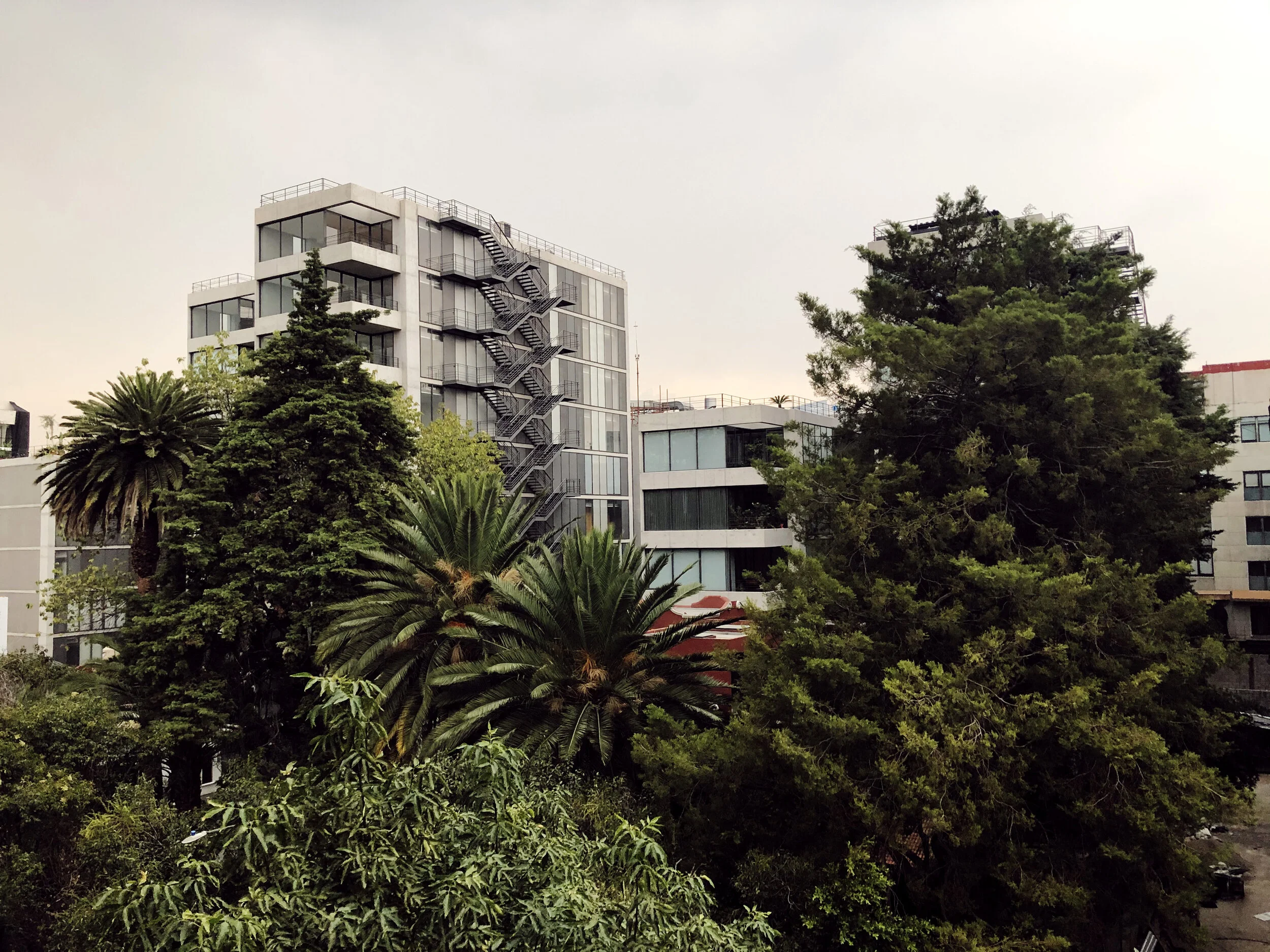
Image: La Condesa, Mexico City
While I waited for the decision, I was prohibited from leaving the UK. I was suddenly stuck in a place that might not welcome me. The stress built up from the experience was visible in both me and my partner. When I received my approved visa email, we felt almost too exhausted to celebrate.
I left my friends and my family in the pursuit of a new life. I left them knowing they were constantly in an unsafe situation—like I was before I left. Would I have put myself through that if I felt like I had a choice? Perhaps all of us who leave when we could’ve stayed are simply stubborn and selfish enough to go through the scrutiny and anxiety of feeling unwelcome somewhere new. Or perhaps there was only so much I could take living in Mexico.
Two years before leaving I had a summer that was clouded in panic attacks, night terrors and a sense of paralysis. I described that summer to my psychoanalyst in what she thought was a very particular choice of words, “feeling like being locked in a pitch-black room, sitting against the wall and making myself as small as possible.” I was stifled by constant fear for my safety, overwhelmed by the expectations put on me, both external and internal, and terrified of this unfixable system. I was unable to put any of this into words; my only solution was to leave.
This is not a unique experience. My generation is distinctive for anxiety disorders and depression. We are distrustful of governments and both politically active and exhausted. These feelings are exacerbated by our individual experiences, my being Mexican, for example. I had the opportunity to leave, but leaving didn’t feel like a choice. It was a decision of where, how and when, but for me, it was never a choice.
I was stifled by constant fear for my safety, overwhelmed by the expectations put on me, both external and internal, and terrified of this unfixable system.
I miss Mexico the most at night. I miss the smell of my mum’s coffee in the morning, the sound of my dog’s name-tag as he wags his tail, the ever-present green salsa in the fridge and the constant smell of food being cooked. I miss going to the beach with my friends, the bright-green palm trees and the warm seawater. I miss the chaotic sounds of Mexico City that make it feel so alive.
At night there is no guilt; it is tossed away as I am left solely to mourn the loss of home. That’s how I always want to think of Mexico: not as a place plagued with guilt but as a home that once was.
Make the most of it and come back home.
My life is mine to choose. My home, the most undeniable truth of one’s identity, is mine to choose as well. I not only had the privilege of making that choice but I used my privilege to accomplish it. The guilt of my decision has become a dark friend, popping in to say hello but never remaining long nor turning into regret. Mexico, with all of its beauty, warmth and incredible people. Mexico, with all of its violence, misogyny and corruption. All of it is a part of me—it is a place I cherish, a place that made me who I am in every way. It’s just not home anymore.
Natalia Albin is a writer, graphic designer, podcaster and branding specialist. Originally from Mexico, she cares deeply about immigration rights, intersectional feminism and examining this generation's relationships with social justice through creative work.